The Bell
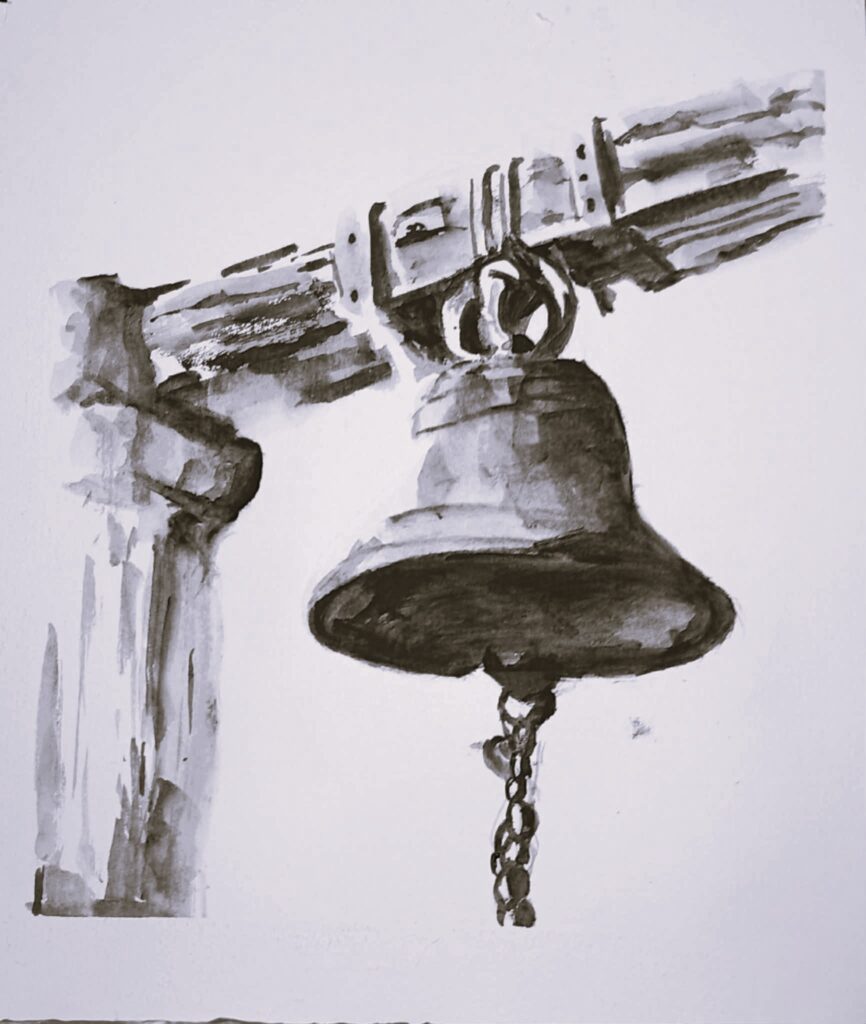
In small Greek villages, death rings a heavy, ancient bell.
Its sound moves through cobbled streets and stone houses. It settles in the leaves of old oaks and elms and slips into gullies and flowing streams. It reaches patched rooftops, jagged mountains, and into deep ravines. It seeps into kitchens, cafés, and taverns, announcing that death has visited this tiny place.
The bell sounds slowly, like dragging footsteps.
People stop. Heads lift from coffee cups, from fieldwork, from fruit picking. Their gaze shifts upward with a quiet, weighted curiosity. Who has death come for on this cold, grey day?
A deep breath is drawn. A small prayer is whispered.
Three fingers join and move quickly across the chest and shoulders in a cross. A familiar gesture of reverence. A gesture of reverence for the same eternity that gives life and calls it back, carried on the sound of the same heavy bell.
For a few brief moments, thoughts gather around one house, one name, one life taken. Roosters fall silent. Stray dogs stop barking. Sheep pause mid-call. The village holds a fragile stillness.
The bell carries its song across rooftops, over hills, and out toward the sea, bearing a life with it.
Here, people know death walks alongside life. They look upward, remain still, breathe their prayer, and then return to their day.
Mother
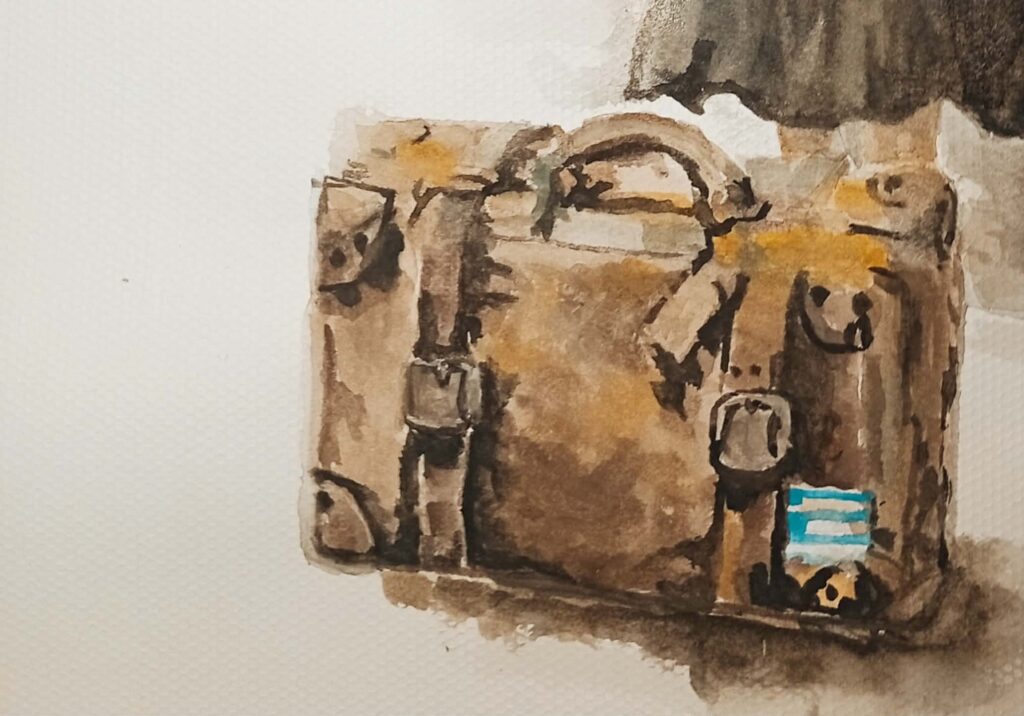
She left with a suitcase too small and still almost empty. Inside it lay a spare dress, a second blouse, and a black and white photograph of her and her siblings, wrapped in the same brown paper that once held beans for a family meal. The paper had already served its first purpose. Now it would serve another.
The village did not protest. It had learned how to fold absence into stone and continue. This was not the first departure born from an inescapable longing for life beyond the hills.
But this leaving carried a different weight. These were not young men pulled toward war or swallowed by anger. These were women in sensible shoes and Sunday skirts. Dry bread rolls pressed into their pockets. Letters clutched in their hands, the paper thinned by tears, promising a bed in a distant family member’s rented house, a position in a factory, a beginning born of need, not adventure.
Parents leaned close to whisper, “Don’t forget who you are.”
Brothers held on longer than usual.
In the new country, identity loosened quickly. Names bent under foreign tongues. Accents hardened or softened depending on the room. Memory grew sharp. The real danger lived there, in the quiet replay of courtyards and olive trees and the weight of a mother’s palm against the cheek.
To migrate required a quiet violence against one’s own roots. They lifted themselves from soil that knew their names and tried to press those roots into ground that resisted them. They accepted that their mothers would age in their absence. That their fathers would grow thinner. That olive trees would bear fruit without their hands to gather it.
There was numbness in leaving. Beneath it, a restrained anger. When counting mouths at the table, daughters were calculations. Their bodies were futures, their futures negotiable. Factories across oceans asked for hands. Villages asked for dowries and land. The arithmetic favoured departure.
Somewhere between the dock and the open water, they crossed a threshold. They were no longer daughters; they became the mothers of survival.
“I won’t forget,” they promised, their voices steady enough to soothe the ones who stayed behind.
On buses that rattled across dust, on ships that groaned through weeks of water, they repeated sewing, tapestry instructions and recipes to one another. Measurements without cups and instructions without paper. The words rose and fell with the movement of the sea. Carried outward, scattered across continents.
From these women came cities layered with memory. Kitchens thick with oregano and steam. Children who learned two lullabies before they learned to read. Grandchildren who would pronounce their names with softened consonants and inherited pride.
The diaspora began with a woman who stepped forward while everything familiar remained still.
She carried more than a small, half-empty suitcase. She carried continuity.
The Worry Beads – Komboloi
There was a time when men were expected to hold themselves together.
Publicly. Privately. Steadily. Without interruption.
They were allowed to work, carry, endure, and provide. Their role was to hold up families, fields, businesses, wars, debt, reputation, inheritance, and silence. Emotion existed, but it had no recognised place of release.
So it travelled into the hands.
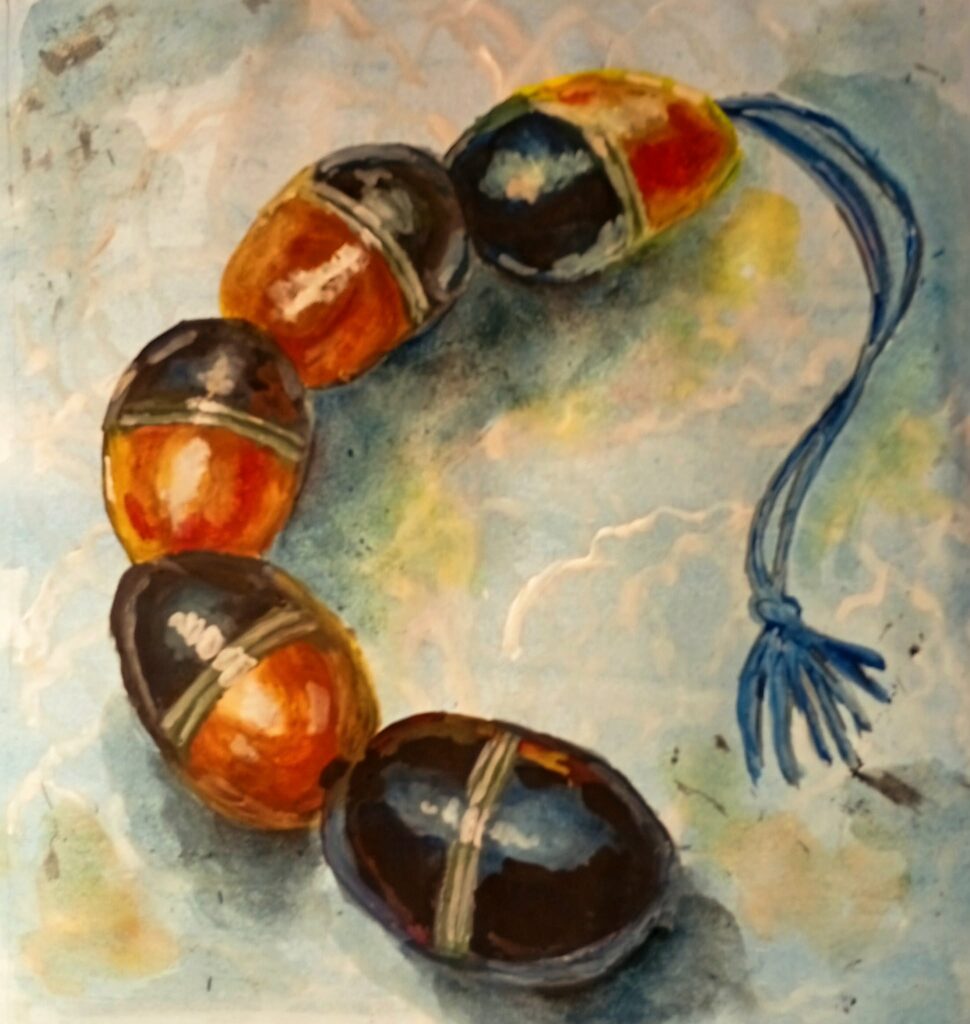
The worry beads, or komboloi, belonged to the inner life. A small loop of beads passing endlessly through the fingers, a quiet pacing of the nervous system, a pacing the body understood long before the mind learned its importance.
Click.
Slide.
Pause.
Click again.
The komboloi’s movement was so simple that it could disappear into the background of life. In cafés, in doorways, on construction breaks, in the space between one obligation and the next, you could see it. A steady string of worry being gently worn smooth.
The komboloi was meditation without permission, regulation without language, company without conversation.
Previous generations of men did not grow up with emotional vocabulary. They grew up with duty. Work became both career and identity. Value was earned through endurance. Rest carried suspicion. Doubt learned to disguise itself as effort.
There was little room for men to speak overwhelm out loud. Fear, loneliness, confusion, identity all moved inward. The body found its own way through.
The komboloi became a quiet intimacy.
With the beads in your hands, you could touch your worry without identifying it. You could soothe restlessness without confession when the inner world had no audience.
A komboloi was personal in a way that modern objects rarely are. It absorbed the warmth of one person’s skin, one person’s rhythm, one person’s seasons of dread, waiting, frustration, boredom, and hope. Over time, it learned your tempo. It understood how fast you moved when anxious, how slow when heavy, how erratic when thought grew crowded. It kept your secrets through friction.
Worry beads were never shared.
Only turned, again and again, by your own hand.
Click.
Slide.
Pause.
Click again.
Thresholds
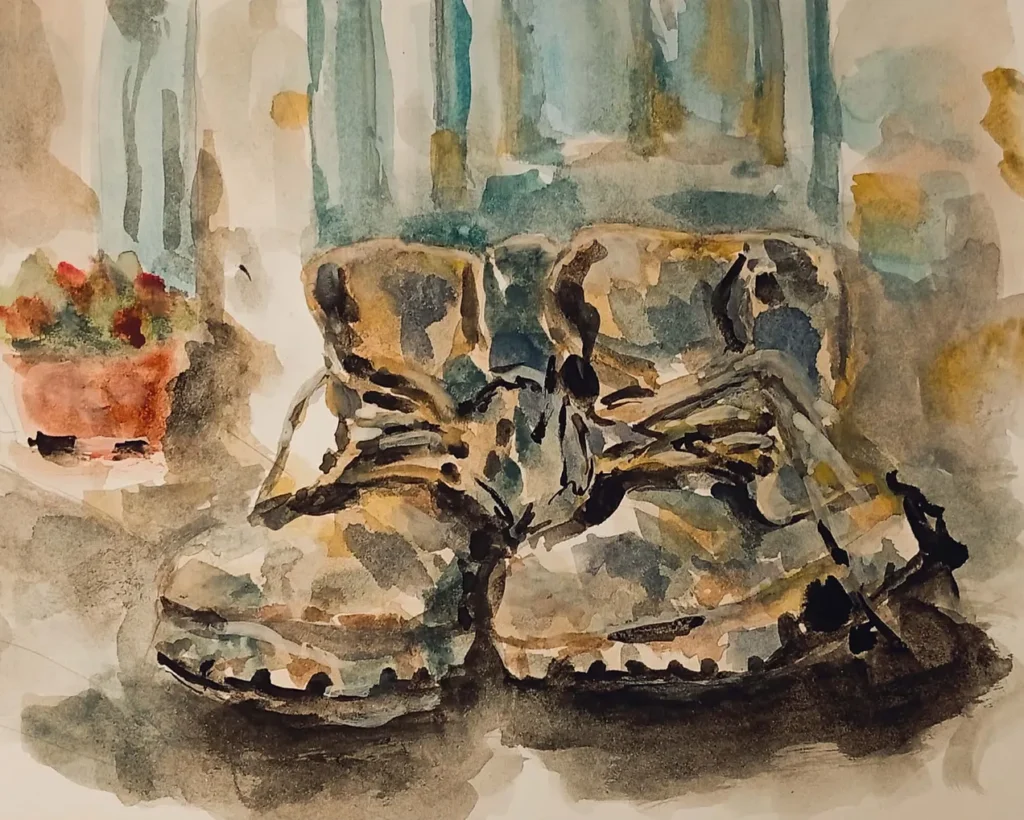
Leave your boots at the door.
This is the threshold, and labour is not allowed to enter here with you.
These rooms are sacred. Hold their sanctity like a shield against internal attack. You cannot wear your shoes through this door. Leave them where they belong, in another world where peace and intimacy do not live. Here is a place of quiet and closeness, and your boots do not belong.
Thresholds hold meaning. They are magic passages that move us between worlds. They carry us into rooms where masks can be dropped, where breath leaves the body in a long, heavy sigh. Thresholds mark our crossing into places where feet rest on coffee tables, where food dribbles onto shirts, where laughter fills rooms, poor manners are allowed, masks are thrown into corners with coats, and performances end.
In Greek village homes, shoes are left outside. You are welcome, my friend, as you are, but your shoes are not. There will be no carrying of dirt, sweat, labour, or fields into this sanctuary. This is the home, and the threshold is strong. Across it may pass only those who love, who quarrel, who know us. Here live the slippers that shuffle across worn rugs and polished tiles. Boots have no business entering this peace.
Boots live in fields. They thrive in fields. They carry dirt and heartache and labour like medals.
They protect tired, weathered feet. They withstand storms. They dodge snakes in tall grass and leave their marks in mud. They know weight. They know effort. They know endurance.
Do not bring them across the threshold. There will be time enough for boots again tomorrow.
Come in… welcome to my peace. Use my slippers, clean and worn. Boots do not belong to peace or respite. They do not belong to family dinners or warm fires. They do not belong to safety, or rainy days under thick blankets. They do not belong to quiet kitchens and soft light.
They belong on the other side of the threshold.
They belong to another world. There will be time enough for that world tomorrow.
Come in, come in.
Harehound
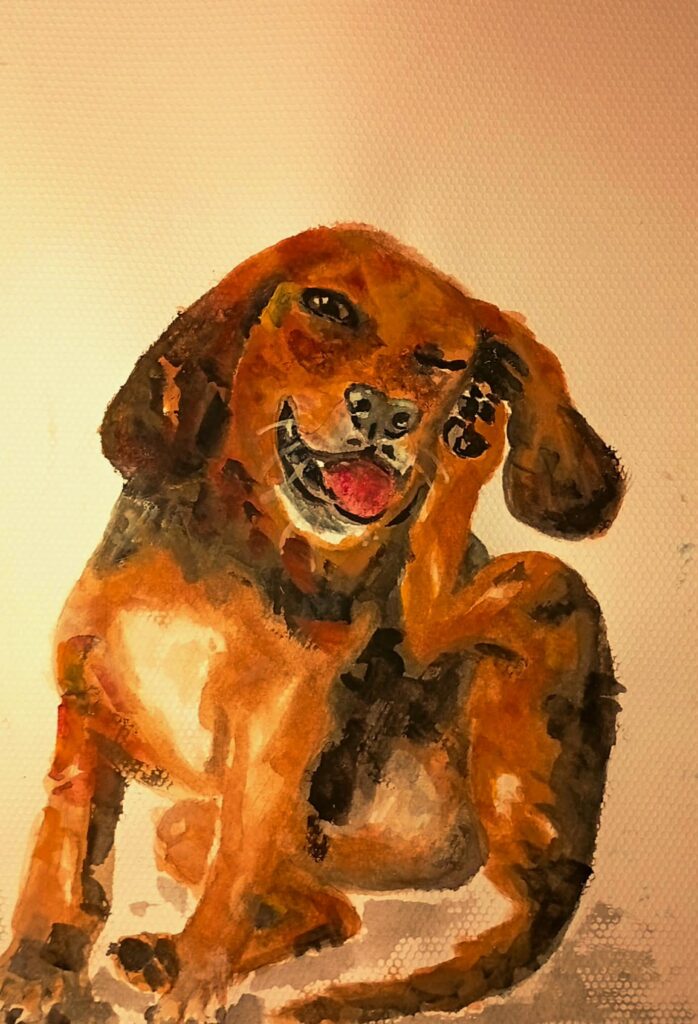
This is Pablo.
A harehound I found in an empty stone-paved alley during lockdown. Flea-bitten but cheerful, Pablo followed me home as though he knew me.
“What’s your name?” I asked, already falling in love.
After a hefty meal and several dramatic slurps of water, he replied, “Whatever you like.”
“I’m going to call you Pablo. You look artistic.”
With one final gulp of water and a shake of his tail, which rotated more like a helicopter blade than wagged back and forth, it was agreed. He was Pablo.
It did not take him long to ease into his new name.
We went to the vet. The vet and I were swaddled in masks and gloves. Pablo looked at us with open curiosity. As needles pricked him, his temperature was taken, and blood was drawn, Pablo never once blamed me for this shocking turn of events.
He blamed the vet.
This awful man who had clearly forced me and Pablo to wear a muzzle.
Pablo did not care for him at all.
“He’s a harehound. A gekka,” the vet said, sensing that he and Pablo would never be friends and wisely keeping his distance from both my possible infection and Pablo’s side-eye. “He’s definitely a harehound.”
As if that should mean something to me.
I did not care what he was. To me there was no need for labels on perfection.
We went home and I promised Pablo that it had all been for his own good. He seemed relieved when I tore off my mask and my face returned to its usual expression of joy.
He ate more. Drank more water. There was a cheese snack and some banana involved. All was well in the world.
Then came the bath.
He just knew that awful man in the white coat and blue paper muzzle had suggested it.
His short double coat covered my bathroom in a generous layer of red and black hair. Despite his suspicions, Pablo discovered he rather liked hot water and the curious pleasure of no longer needing to scratch.
More food. More water. A celebratory nap.
He curled up at my feet and fell in love with me too.
When a stray cat appeared, I asked that he do his best to override his instincts and accept the cat as a friend. He promised not to drag the cat around by the tail but made no commitment to friendship.
I thanked him for trying. I understood how difficult this must be for a harehound. I had done my research.
Harehounds are an ancient Greek breed, documented as having hunted small prey alongside the ancients. Known for their stubbornness and cleverness, they have used those traits to survive for millennia. Now they mostly roam free in the Greek countryside, though they have always been fond of human companionship. In the ancient world they were just as likely to sit beside philosophers as they were to hunt beside heroes.
Now my harehound hunts for my slippers and sits quietly breathing next to me while I paint or write. When I finish, I show him my art or read him my words. He seems entranced. Absolutely fascinated by everything I say and do.
He loves my art. It does not have to be good.
He loves living in a home where someone asks his opinion.
When I read to him, he smiles and his helicopter tail rotates with enthusiasm.
The cat, called Oscar by the way, yes, Oscar Wilde, shows complete indifference. Pablo is quick to point this out. He wants me to be very clear about who loves me most.
We go for walks. In small villages, leashes are largely unnecessary for friendly dogs. Unable to match his energy, I shuffle along while he runs ahead, pivots, runs back, then ahead again. Always circling me. Always alert in case I am attacked by chickens, donkeys, or worse, in case I discover another cat and attempt to bring that one home too.
Once, on such a walk, he brought me a squirrel.
My heart wrenched.
His eyes were wide, his tail spinning, so proud to bring me something of value. I explained that the squirrel was a free citizen of the forest and again asked that he override his instincts. He looked confused but agreed. I promised that if he put the squirrel down, I would allow him to take my slippers out for a walk next time.
Thereafter we were spotted around town, me in my black waterproof coat and Pablo happily trotting beside me with pink slippers in his mouth.
I am pleased to report that the squirrel survived and most likely warned all other small woodland creatures because, to my knowledge, Pablo was never tempted again.
One day Pablo scratched his ear.
I panicked.
Was it fleas again? An infection? A tragic relapse?
We raced to the vet. Pablo did his best to stage a riot. He offered the vet his most refined side-eye, barked at the assistant, then settled when I assured him there would probably be no needles, merely an ear and coat inspection.
He agreed reluctantly.
“What’s wrong?” the vet asked, keeping one cautious eye on Pablo.
“He was scratching his ear.”
“How often?”
“All the time!” I exclaimed dramatically. I took a breath, checked myself, and corrected to, “Sometimes.” I took another breath. “This morning,” I now pronounced sheepishly.
After a thorough examination, I was informed that Pablo was flea-free and infection-free. Pablo’s tail resumed its helicopter duties.
I remained pensive.
“Then why would he scratch?”
The vet looked at me kindly.
“Sometimes, Eleni, dogs just like to scratch.”
Pablo looked at me calmly, scratched once more for emphasis, and resumed disliking the vet.
Dear diary,
Today I shuffled along the cobblestone street that walks me through the fields, across this tiny town, and toward the local post office. It opens for only two hours, three times a week: Monday, Wednesday, and Friday, 12 to 2.
That is the price of isolation. Communication is not a given here. It is something you wait for quietly, with a kind of longing.
There is an agreement with the Greek post. They will carry our lives, sealed in little envelopes and brown paper packages, out into the world, as long as we arrive at the post office at a specific time. Otherwise, communication becomes email, a troubled internet connection, or your own, self-reflective internal chatter.
I tried to imagine my world without physical post. Only machines and data, sending fragments of an electronic life. I recoiled. Diary, I’m not someone who wants to disappear off the grid. Technology has brought me as much joy as anything that has allowed me to create. It has been the quiet caretaker of my life. A person living by the sea, surrounded by nature, with paintbrushes, a notebook, a cheap phone, and data roaming.
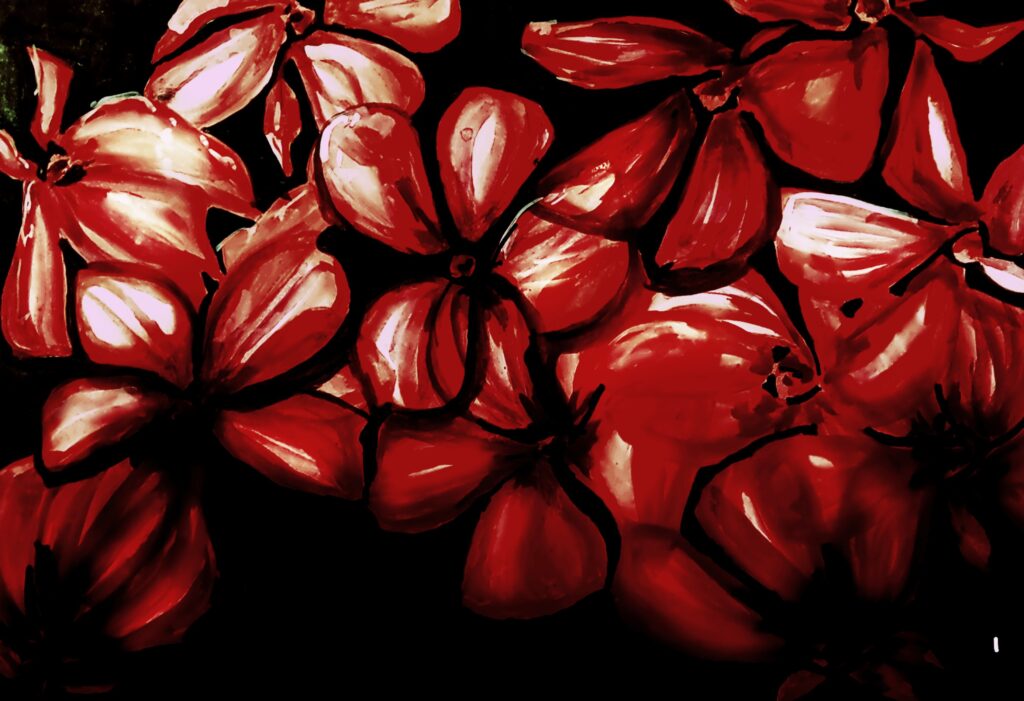
Today, as I shuffled toward the post office with my green envelopes in hand, packed with cards and essays, little messages in a bottle ready to drift into a sea of ever-decreasing paper mail, I noticed that a farmer’s field, left fallow to rest for the season, had filled with red poppies.
Spring has arrived in this tiny backwater of Greece.
Nature’s way of telling us that we have carried wood, wrapped ourselves in blankets, curled up with dogs and red wine for long enough. The poppies seemed to say, it is time now. Time to step outside, stretch our legs, and shake the winter from our backs. Where a farmer had allowed the land to breathe, nature had answered with a field of red.
I stopped. I tried to remember when the field had come to life. The last time I walked this path, there had been nothing. Now there was a quiet explosion of colour.
I resisted the urge to pick them. I didn’t want to smudge my carefully packed envelopes with soil. Still, something shifted in me. A kind of relief. Like a sailor who has battled through a storm and finally sees land. As you know, diary, I am not a winter person. Winter is charming for a while, then it makes me solemn and weepy.
Instinctively, I turned toward the sea, looking for confirmation of the arrival of Spring. The sun scattered crystal pixies across the water, playing tricks, making me think it might already be warm enough to swim. The poppies seemed to smile.
I shuffled on in my designer sports shoes. Expensive shoes, though that hardly mattered to me. I bought them for the comfort they offered on these uneven cobblestones. I wanted to move more easily between home and the post office, to run up and down mountain pathways and to keep up with my rambunctious dog, Pablo.
I resisted the call of the poppies. They invited me to lie down among them, to smell them, to gather them in my arms and carry them home. Instead, I kept going.
As I passed my neighbours’ houses, I called out their names with a morning greeting, loudly and cheerfully. It would be strange not to. Suspicious, even. Three voices called back their greetings. Two faces appeared at windows, asking where I was going, though they already knew. Seeing me with my envelopes has become familiar in this small town. Still, asking is a habit born of familiarity and community, of an insular world where no one passes unseen.
As I walked, I glanced down at my shoes and wondered how they had arrived here. How does a design conceived somewhere on another continent, travel to a manufacturer on yet another continent, get marketed to urban buyers, and then end up on my feet, shuffling past poppies in a small Greek village?
How does something move from an idea into an object that circles the world?
I held my envelopes a little tighter, not out of fear, but out of affection.
Diary, are you listening? I know I am rambling, but something about the poppies, about surviving the winter, makes me feel as though I want to embrace the whole world. These shoes, imagined somewhere far beyond the understanding of my curious neighbours, now carry me across these cobblestones, past their windows and fields. I looked at the poppies, then down at my shoes, and for some reason, I felt awe.
Eventually, I reached the post office. Monday, Wednesday, Friday, twelve to two.
The woman who runs it is always cheerful. Efficient. Quick in her movements. Today she wore a pink shirt and jeans, her long brown hair gathered into a neat, almost librarian’s bun. She is sweet. She knows me well enough now to call if I do not appear on my usual day with my envelopes. Sometimes she arranges her work so that we can share a coffee and a little gossip.
She likes that I understand the complexity of what she does. I like her because she works with the precision I have always admired but lacked. She is, in a way, a station master of communication. Sending pieces of us out into the world, receiving pieces of others in return. My post club goes out, my shoes arrive, and she stands there, quietly managing it all.
Today, over coffee, I told her about the poppies. She smiled and asked me to bring her some next time.
I liked that. The idea of carrying something from the wild field into her small, ordered space. A piece of wind, soil and colour placed gently beside her stamps and parcels.
Later, during the midday siesta, I dreamt that I was lying in that field. Arms and legs stretched into the red. I dreamt of propping myself up on my elbows, looking out toward the sea. I dreamt of the rest of the world rushing. Taxis, trains, offices, bills, deadlines, responsibilities. Millions of people creating, shipping, wrapping, unwrapping. A vast and intricate system, all of it somehow attached to the shoes on my feet and the envelopes clutched to my chest.
I dreamt that I stayed there, in the field, until evening fell. Until the poppies themselves, now folded into the quiet of darkness, told me it was time to go home.
Thank you, diary. Goodbye, until tomorrow.
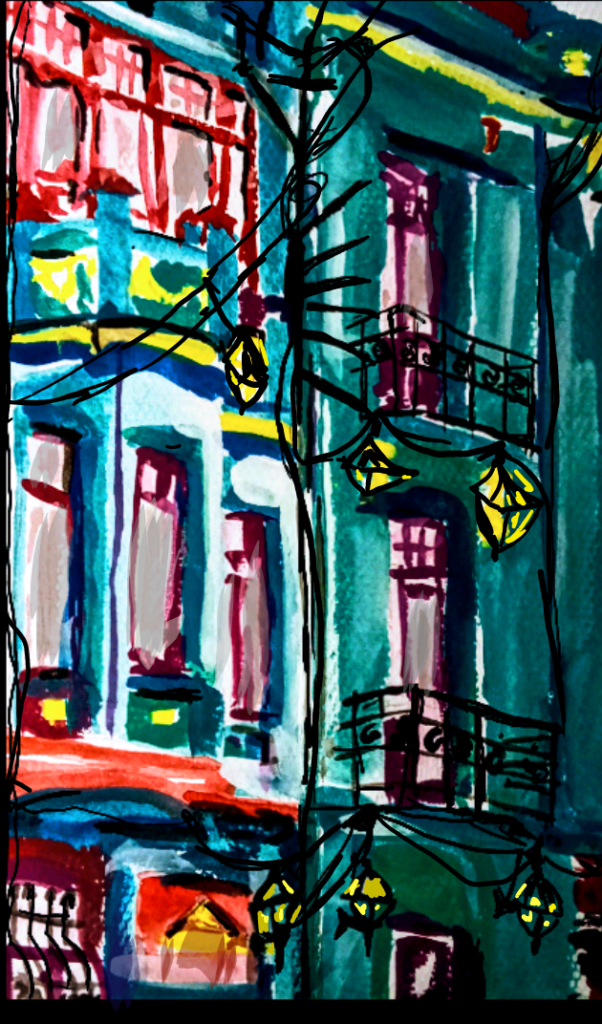
A neighbourhood in rural Greece is far more than a row of houses along a street. It is a living organism composed of homes, people, pets, stray animals, farm creatures, wild things, trees, vines, flowers, and cracked stone paths warmed by the sun. Every living thing belongs to the fabric of the place. All hold importance. All become, in one way or another, the business of everyone who inhabits that shared space.
Privacy, admittedly, is not held in especially high regard. Those who retreat behind tall hedges and permanently drawn curtains are often considered to have quietly rejected the life unfolding outside. Yet within this constant intermingling comes something deeply valuable: an invisible network of protection, care, and belonging.
It is this quiet system that allows children to play in the streets long after darkness falls. No child goes hungry because all children are fed by all. Their well-being belongs not only to their parents, but to the neighbourhood itself. Trees offer their shade generously through the brutal white heat of summer, and in return, they are watered, pruned, protected, and loved for their service. Cats drift lazily between gardens as though borders do not exist. Dogs patrol the edges of the village, warning of foxes near the hens or wild boar moving through the hills. They are rewarded with scraps of food, absentminded pats on the head, and a place in the social order of the street.
Bees move tirelessly between blossoms while geraniums spill from balconies in flashes of red, pink, yellow, and violet. Bright washing hangs from clotheslines like small village flags, fluttering between blue shutters and sun-faded walls. Flowers are admired, commented upon, and carefully stepped around so their colour may continue offering joy to everyone who passes.
The elderly sweep the streets each morning with crooked brooms, never stopping neatly at the borders of their own property but continuing until the entire lane is clean. As they work, they grumble affectionately about younger people sleeping too late and neglecting the sacred duty of sweeping leaves from the gutters before the heat arrives. This is the morning work.
Roosters announce the beginning of the day. Eggs collected from backyard henhouses are redistributed by midday to neighbours who have none of their own. In the afternoons, chairs and benches emerge onto the street as naturally as birds returning to familiar branches. People gather outside to drink Greek coffee and watch children battle over footballs, bicycles, and territory. Younger neighbours appear carrying phones and tablets, patiently helping the older generation pay bills, search for information, or navigate the strange invisible world of the internet, a thing regarded with suspicion, wonder, and admiration in equal measure. At this point, the younger generation’s late sleeping is temporarily forgiven.
As evening falls, teenagers begin their rituals. Lip gloss is applied. Favourite shirts are chosen with grave seriousness. They attempt, usually unsuccessfully, to evade the neighbourhood interrogation about where they are going, who they will meet, and when they intend to return. Grandmothers ask questions to which they already know the answers, delighting in the performance as much as in the gossip itself.
Privacy, people often joke, belongs to colder countries where neighbours live behind fences, speak rarely, and do not exchange fresh eggs in the morning.
Neighbours in rural Greece become more than family. They are the first to arrive in times of trouble. They notice when you are unwell and when you are thriving. They argue over barking dogs late at night, over fences placed a few inches too far across a boundary line, over power outages caused by impossible tangles of electrical wires drooping overhead like nests of black vines. Yet somehow these disputes are nearly always resolved over an evening coffee beneath the trees. Beneath every disagreement rests a deeper understanding: no quarrel is ever important enough to stop being neighbours.
In rural Greece, the word neighbor means something far greater than simply the person who lives beside you. Neighbours are the family assigned to you by geography, fate, and time itself. They become teachers, protectors, students, caretakers, and witnesses to your life. The neighbourhood becomes an ecosystem of colour, hardship, celebration, noise, grief, work, gossip, generosity, and endurance. It is life unfolding over and over again beneath balconies, between gardens, and along sunlit streets where nothing truly belongs to one person alone.
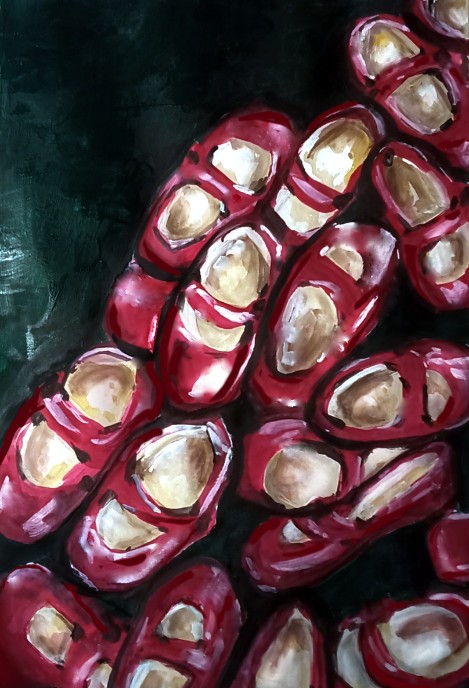
The Red Shoes We Are Given
On desire, obedience and the handmade life
A red Mary Jane is a strangely contradictory object.
It is bright, confident and impossible to overlook. Yet its rounded toe and neat strap belong to childhood, good behaviour and Sunday clothes. It suggests both rebellion and obedience. The colour says look at me. The shape says I know how to behave.
Red shoes have carried many meanings through history. The red heels of Louis XIV’s court signalled privilege and proximity to power. The Pope’s red shoes evoked both religious authority and the blood of Christian martyrs. Christian Louboutin’s red soles transformed the colour into a modern emblem of luxury, while Dorothy’s ruby slippers in The Wizard of Oz became symbols of protection, transformation and the discovery that the power to return home had been with her all along.
Red shoes may signify power, sacrifice, wealth or escape. Yet in stories about girls and women, they frequently become something more troubling: objects through which female desire is awakened, judged and controlled.
Hans Christian Andersen’s fairy tale The Red Shoes offers the darkest version. Karen becomes consumed by a pair of beautiful red shoes. She wears them when she should be attending to her sick adoptive mother, and once she begins dancing, she cannot stop. The shoes direct her feet against her will. She dances through fields, forests and graveyards until, in desperation, she asks an executioner to cut off her feet. Even then, the severed feet continue dancing inside the shoes.
It is a brutal story, shaped by religious ideas about vanity, temptation and punishment. Karen looks at the shoes when she should be thinking of duty. Her desire is treated as a moral failure, and her punishment is grotesquely disproportionate. The girl who wished to be seen is made into a warning for other girls.
Clarissa Pinkola Estés revisits a variation of the tale in Women Who Run With the Wolves. She places it within a discussion of self-preservation, captivity and poisoned temptation. In her interpretation, the story becomes less a warning against female vanity and more an examination of what happens when a woman abandons an authentic life in exchange for an acceptable one.
In Estés’s version, the orphan girl initially has no shoes. She gathers scraps and makes her own pair of red shoes by hand. They are imperfect, but they belong to her. They have grown out of her ingenuity, necessity and pleasure.
Then a wealthy older woman takes the girl into her home. She gives her food, safety and respectable clothing.
She also burns the handmade shoes.
The girl has been rescued, but something essential is destroyed during the rescue. Her unruly, self-created life is exchanged for comfort, order and social approval. Later, when she sees a polished pair of red shoes in a shop, she wants them desperately. These are not the shoes she once made. They merely resemble what she has lost. Their colour awakens the memory of freedom, but they are a manufactured substitute for it.
This distinction between the handmade and the store-bought is the heart of the story.
The handmade shoes represent more than creativity or craft. They represent a life made from the materials actually available to us. Such a life may be rough, unconventional and visibly repaired. It may fail to satisfy other people’s ideas of success. Still, it carries the shape of its maker’s hands.
The store-bought shoes offer something different. They are smooth, admired and immediately recognisable as desirable. Their beauty persuades the girl into a life that is not her own.
Once she enters them, the shoes begin to dictate her movement.
This is how taming often works in modern culture. It rarely presents itself as simple imprisonment. More often, it arrives as improvement.
Comfort by design.
The old woman does not place the girl in a dungeon. She washes her, feeds her, dresses her and teaches her how to behave. From the outside, the girl’s life has become unquestionably better. Yet the price of admission is the destruction of the objects she created for herself.
This makes the old woman more interesting than an ordinary villain. She represents the respectable world and its sincere conviction that it knows what a girl should become. She may even believe she is acting lovingly. Society often disciplines women through concern: concern for their appearance, reputation, safety, desirability and future.
The command is seldom simply do not be free. It is more subtle.
Be free, but attractively so.
Be independent, but remain agreeable.
Be ambitious, but not intimidating.
Be visible, but maintain the correct body, face, home and tone of voice.
Be different, but make your difference easy to recognise, package and purchase.
Modern culture has become particularly skilful at selling rebellion back to women in acceptable forms. Independence can be bought as a lipstick shade, a shoe, a slogan or an expensive version of carelessness. Even wildness can be marketed, photographed and made obedient to an algorithm.
The store-bought red shoes appear to offer the girl her lost intensity. They are brighter and more beautiful than the ones she made herself. Yet they contain no real freedom. They give her only one movement, repeated endlessly.
That is the danger of the false life. From the outside, it may look energetic. A woman may be constantly moving, working, improving, consuming, presenting and producing. She may appear exceptionally alive.
Yet movement is not the same as agency.
The question is not merely whether she is dancing.
The question is whether she can stop.
To speak of an authentic life does not require us to romanticise poverty or reject comfort. The orphan girl’s original existence is genuinely difficult. Safety matters. Money matters. Belonging matters. A handmade life should not mean that women must suffer nobly without assistance.
The story asks something more uncomfortable: what part of ourselves are we expected to surrender in return for security? How easily can comfort become a cage when it requires us to live entirely according to somebody else’s pattern?
In my painting, the red Mary Janes are crowded together. Their repetition makes them cheerful at first, almost playful. But the longer I look at them, the stranger they become. A single red shoe can suggest individuality. A mass of similar red shoes begins to suggest uniformity.
The Mary Jane itself carries that tension. Its strap holds the foot safely in place. It is practical, neat and associated with girlhood. Painted red, however, it becomes more assertive. The good little shoe has discovered a dangerous colour.
Or perhaps the colour has been permitted precisely because the strap remains fastened.
The most effective forms of social control do not erase desire completely. They give it an approved object. They allow the girl to wear red, provided she wears the correct red shoes. She may express herself through the choices placed in front of her, but she must not return to the woods and begin assembling a life from scraps.
Estés’s handmade shoes offer another possibility. They suggest that authenticity is not something waiting for us in perfect condition. It must be pieced together. It bears evidence of work. It may be unfashionable, uneven and incomprehensible to those who believe a good life should look professionally finished.
To make one’s own shoes is to accept responsibility for one’s direction.
It is also to accept that they may not resemble anybody else’s.
Red shoes will probably continue to mean power, beauty, temptation and escape. They will remain attached to fantasies of transformation because shoes are what carry us from one state of life into another. They touch the ground while allowing us to imagine that we might rise above it.
But perhaps the important question is not whether the shoes are red, handmade, expensive or beautiful.
It is whether they still belong to the feet inside them.
Can the wearer choose where she is going? Can she change direction? Can she rest? Can she take them off?
Or have the shoes learned to dance her?